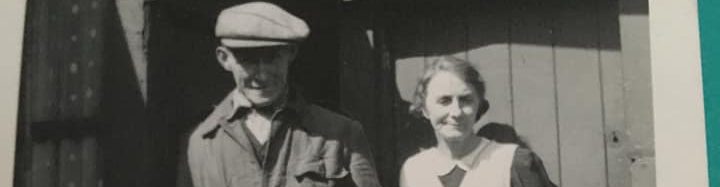
Contributors and researchers
The group needs a few more volunteers to help out on researching topics, if anyone is interested just drop us an email at admin@johnsmavecave.org.uk.
- Pick any topic that interests you – or start off an entire new post
- 100% voluntary, no obligations, you can do as much as you want and drop out at anytime
- Zero hours contracts and not even the minimum wage for anything you contribute
- No meetings or committees, everything in the virtual world, unless we get enough people and fancy a discussion in the “pub”
- No requirement to live or have lived here, just an interest in the history
General Information And More Detail on Some Topics

What was a Pinfold?
When the shiremoor was enclosed it was no longer common grazing land, each plot was allocated to a village. Any unauthorised cattle found grazing on the moor were impounded in a “pinfold” by an individual called a Pinder. The cattle remained in the fold until the owner came to claim them. The Pinder made a charge or levy to cover the cost of feeding the cattle whilst in his custody. If unclaimed after a certain period the Pinder was allowed to sell the cattle to cover his own costs.
Most villages around the time had a pinfold, some were quite substantial stone enclosures, partly to keep the cattle from escaping, mostly to stop any owners from removing their cattle when the Pinder was not there, thus avoiding paying the levy. The example in the photo still exists at Ryton & Crawcrook, now listed buildings. Images on FabulousNorth Website
The Shiremoor

A map showing the ancient parish of Tynemouth, with the Shiremoor boundary highlighted in red by the our local history team. Image from “A History of Northumberland” published in 1907 by H.H.E Craster MA.
Billy Mill

Billy Mill might be the “Billings Mill” referred to in a grant given to the Priory of Tynemouth in 1320. It was rebuilt between 1597 & 1599, burning down sometime prior to 1760, when it was rebuilt in stone. It was also at risk of falling down in 1658, when a Ralph Gardner of Chirton dug a quarry close to the west side of the mill.
The Allotment Mill

This mill was built to grind grain for the pit ponies, not the people. The building survived into at least the 1960’s. Initial research seems to show that the old steam rope haulage engine from the nearby Backworth Waggonway was reused to power the mill wheel. Goes to show, recycling is not by any means a new phenomenon. Our ancestors seem to make a far better job of reusing everything possible.
Any evidence of the Mill and Low Allotment / Allotment Farm were removed when the Cobalt access road was constructed, archeology studies at that time found nothing of note to be recorded. The area had previously been used as the domestic waste tip for the Borough. this was removed to allow the creation of the Cobalt Business Park.
Old map of the area

The image below shows some of the existing buildings, including the grain mill, compared to a modern map.

West Allotment Community Centre

The building was originally used as a workmen’s institute in 1901 and this is confirmed on maps of that time. It was later used as the National Coal Board pay office. The building is still owned by Coal Industry Social Welfare Organisation.
The Working Mans Institute

The Institute, funded locally and not by the State, with the purpose of educating the working class of the time, this included social activities, following previous work by the Primitive Methodist movement, which had an active chapel in the Allotment.
It was registered as a charity on the 21st June 1963 when the West Allotment Boys Club was formed. West Allotment Community Centre
Pit Ponies

At the peak in 1913, there were 70,000 ponies underground in Britain. In later years, mechanical haulage was quickly introduced on the main underground roads replacing the pony hauls and ponies tended to be confined to the shorter runs from coal face to main road (known in North East England as “putting”) which were more difficult to mechanise. As of 1984, 55 ponies were still at use with the National Coal Board in Britain, chiefly at the modern pit in Ellington, Northumberland. Probably the last colliery horse to work underground in a British coal mine, ‘Robbie’, was retired from Pant y Gasseg, near Pontypool, in May 1999.
In 1938 the Pay Bill came into being allowing pit workers to go on a fortnight’s holiday. This had its benefits and drawbacks for both pony and man. Bringing ponies up and down the mine shaft wasn’t without risk to both human and equine. The change of schedule led to these normally quite ponies becoming very agitated. Some collieries worried whether it was cruel to take them above ground and then to return reticent ponies to a life underground whether it was for holidays, lockouts or long strikes as was the case in the 1980s.
Being used to the dark passages, often sacks were put over their eyes to give them time to adapt to sunlight, and also to keep them calm, or otherwise they were put out at night. A handler was designated to oversee them when above ground. (Text from an OU article)

Sparky & Carl, retired from Ellington Pit in 1994 © National Coal Mine Museum for England.
Retired Miners Cottages

Miners West Allotment
