Unless stated – all images are CC BY-NC-ND under the Creative Commons Licence. You are free to share for non commercial use and please quote the source as this website
These are just some examples of the information and photos we have, to read more either follow the link if shown or go to the topic in the Main Menu (lots of drop down options there)
The Hairdressers Salon
Benton Road approx 2018. Now the Nursery. Great to see an old building getting a new life. To the left is the 3rd Primitive Methodist Chapel location in the village, now a house. The hairdressers building is now in the Nursery


The Insurance Mans House
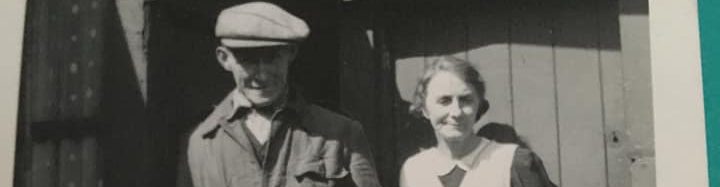
From the 1921 census we know he was the genuine “Man from the Pru”, the Prudential Insurance Society.
Mitchells Shop


The COOP
As a sunbed manufacturer and prawn sorting factory (refused planning permission!) and packing plant. did anyone work there at the time.

Prawn Factory
Application was refused in 1990, but it did operate? Anyone work there.
Shop
End of Maud Terrace, Jack and Sadie Booths shop


The Undertaker
Or the site of his house, the undertakers parlour was not in the Allotment! No ghosts to be found there.
Shop
No 2 Carlisle Terrace, any information welcome


Shop
Nainby, any information welcome.
Shop
Lamb Terrace, any information welcome


Shop – Halls Hut
Halls Hut, 2024, any info welcome Image © WALHG 2024
The Telephone
One of the first houses to have a telephone, willing to let people make calls in emergencies. The Gray family?


Northumberland Arms
Or Hills’s to locals, Hill being a well known publican who was the tenant landlord for several decades Link to more…
To prepare the first maps the Ordnance Survey sent teams of surveyors to all parts of the country to correctly identify place names, the surveyors notes also capture snippets of social history. The entry for the 1st Edition 6″ maps (about 1842) mentions the original Northumberland Arms, the name was verified from the public house sign and also the landlord, a Mr Call. The entry states “a respectable Public house and Brewery”.
The Dairy
A lane ran along the back of the present Nursery building to the Dairy. Now in 2024 part of the allotments.


Shop
Carlisle Terrace, any information welcome
The 2nd COOP Store
Now as As-NU car parts retailer


The Second CooP 2024
A varied life, and still serving the community. A Coop, a car parts retailer, a Chub Security Office and now what we have today. I’m not sure how far back it was called Rudyerd House. The name is fairly common on North Tyneside, anyone know the background.
The CooP (Rudyerd House)
What was originally the stable block in the rear yard, the door to the loft hay store is still there. © WALHG 2024


The Sub Post Office
Its location after moving from the original COOP building over the road. The rest of Turner Street has been demolished.

The Sub Post office
Turner Street side of the Sub Post Office 2024
The Sub Post Office
Bob Booth handing a momento to the local postman on his retirement. Names below

The names in the photo – From the left – Keith Dunwoody (postman), Joan Mason, Mrs Sample (Norah Cummings mother), Emily Thompson, behind her Ann and Lynn Temple, Gilbert Crosby (retiring postman), Johnny Reid, Bob and Nancy Booth, Lorraine Wilson and baby, Alma Graham, Betty Thompson and Mrs Salter.

The First COOP Store
And First Sub Post Office
The Grain Mill
Roughly under the Cobalt Hotel car park, the grain was fodder for all the pit ponies, they only saw the light of day once a year.


Turner Street
Now a new house next to the shop (Sub Post Office)

The Undertakers House 2024
The Grocers Shop
Just around the corner from the Northumberland Arms


The Grocers Shop
The photographer was standing approximately were the Cobalt roundabout is today. The Northumberland Arms on the right, Northumberland (Allotment) Square behind on the left. The Grahams grocers shop.
The Grocers Shop (rear)
The Northumberland Arms would be on the left in this photo


The Grocers Shop Family
The Grahams
Northumberland Arms
Sambucas today


The First CooP Store & Original Sub Post office
Late 1800’s
The Video Rental Shop
The CooP store in one of it’s many after lives.


Taylor Street New Build
From Bob Booths collection
New York Schools


Miners Cottages West Street
We know exactly who lived in each house from the 1911 Census, one for a future post
The Butcher 1911
The 1911 Census shows a Joseph Gibson Whitfield as being employed as a butcher in his own right (self employed). Living at No 11 Allotment


Dickens DIY Store
Now Boundary Mills, the buildings first use was a light engineering, machining waveguides used in radio / radar for PYE © Chronicle
Article from Remembering the Past, this has to be the Gray family?
Before the war my Dad had a fruit and veg business in West Allotment He had a succession of horses, one of which he broke in himself. Consequently, I was never afraid of horses and when I was about eighteen months I would totter between the horse’s front legs. My Mam told the tale of when I did this to a strange horse. At that time I didn’t have much hair, only a little tuft at the front. One day I went missing and when she found me I had a small red patch where my hair had been. The horse had quietly nibbled it off.
Not long after the start of the war my Dad gave up his business and sold his horse as he knew that he would soon be called up. He took a lease from the colliery on a small grocer’s shop about half a mile from where we lived. He wanted to keep my Mam busy while he was away, and he thought it would be a nice little business for him to come back to. He always said that he would never work for a boss. He installed us; me, my Mam and my small brother, who was only two years old at the time.
The property was very old with deep stone windowsill’s. The shop stood on the side of a main road to Newcastle. Alongside the shop was our only living room with a small back end tacked on, with a cold water sink. Stairs led from the front door to two bedrooms. Of course the living room had a large open fire but not an oven. We had a gas cooker in the back shop. This was a huge area behind the shop where the provisions were stored. I remember huge wooden bins for flour and sugar etc. Everything arrived in large sacks and had to be scooped up into paper bags. All vegetables were sold loose, and potatoes were sold by a half or quarter of a stone. Sugar was sold in one or two pound blue paper bags.
Behind the back shop was the wash house. It also had an open fire and then the toilet. We had a free standing galvanised gas boiler which heated the water for our baths. These were taken in a long tin bath (in front of the fire in winter), which had to be emptied by hand into the sink in the yard. In the corner of the yard was an old stable with hay loft and I believe that the building had once been a coaching inn.
During the last war, at the time of the invasion threat, we had huge stocks of tinned food in the back shop. It was intended to be enough to feed the area for at least two weeks following any invasion. Of course these emergency rations had to be closely guarded and checked regularly. Just about all of our food was rationed. Generally two or four ounces of most foods were allowed per person per week. I remember my Mam’s list of foodstuffs still: bacon, butter, sugar, tea, margarine, lard, cheese, jam and eggs.
Eggs were not always available but if you had a doctor’s certificate you were guaranteed one egg per week. Children under 5 years did not get a tea ration as they received orange juice and cod liver oil from the Food Ministry. All tinned food was on a point system. Points had letters; ‘A’s and ‘B’s for meat, fish, tinned fish, sweets etc. Apart from growing vegetables, a lot of folk kept chickens and one neighbour two or three doors away kept a pig. She eventually killed the pig herself and gutted and cleaned it. All of it was used, even the blood which was poured into a large enamel dish and stirred with her hands to prevent coagulation. Barley and spices were added, and the result was gorgeous black pudding.

Coal Merchant
A model of the coal drops at the Coal Merchants Yard, now RS Vehicle Services. Must have been a prosperous venture as the owner had a very large house in the village.
<button onclick="window.scrollTo({top:0, behaviour: 'smooth'});">Scroll to top</button>